Dog bites can cause serious physical injuries, emotional trauma, lost income, and long-term medical complications. One of the first questions victims ask is, “Who will pay for my dog bite costs?” The answer depends on several legal and insurance factors, including where the attack occurred, who owns the dog, and what type of insurance coverage is available.
In most cases, compensation does not come directly out of the dog owner’s pocket. Instead, it is typically paid through insurance policies. Most commonly, homeowners’ or renters’ insurance. However, there are exceptions, and understanding how liability works is critical to ensuring you receive full compensation.
Below, we break down exactly who may be financially responsible after a dog bite and how claims are typically handled.
The Primary Source of Compensation: Homeowners Insurance
In the majority of dog bite cases, the dog owner’s homeowners’ insurance policy pays the settlement or judgment.
Did You Know?
“Many dog owners don’t realize their standard renters insurance includes personal liability coverage for dog bites.”
Most homeowners’ insurance policies include personal liability coverage, which protects the policyholder if someone is injured on their property. Dog bites fall under this category in many situations, even if:
- The dog has never bitten anyone before
- The bite occurs off the owner’s property
- The victim was a guest
Insurance companies investigate the claim, determine liability, and negotiate a settlement. If the case goes to court and the victim wins, the insurer generally pays up to the policy limits.
However, some policies exclude certain dog breeds or exclude dogs with a prior bite history. In those cases, coverage may be denied — which is why legal representation is essential.
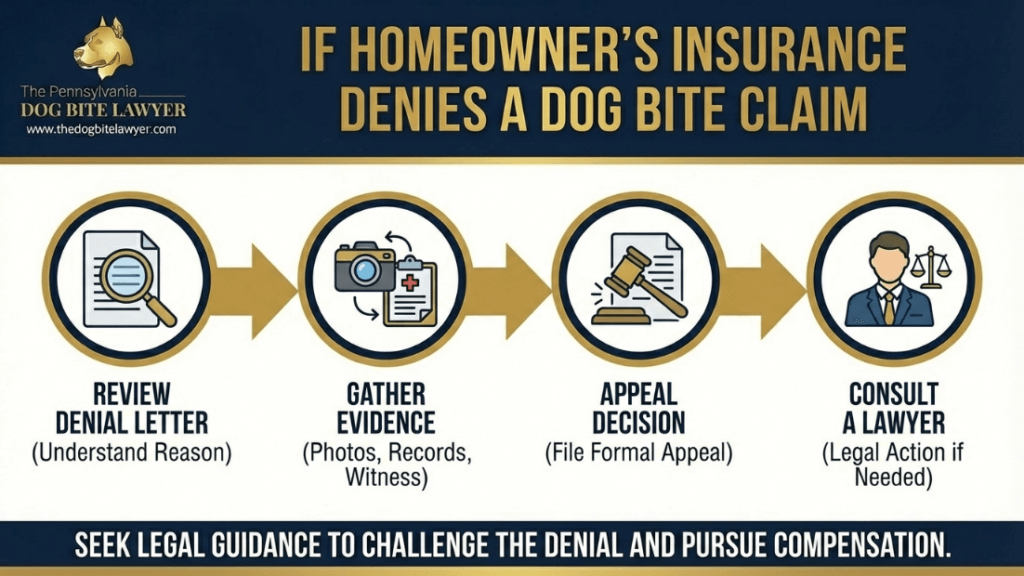
Steps to take if your homeowner’s insurance disputes your dog bite claim
Renters Insurance Coverage
If the dog owner is renting their home, renters’ insurance often provides personal liability coverage similar to homeowners’ insurance.
Many renters do not realize their policy can cover dog bite injuries. If the landlord does not own the dog, the landlord’s insurance usually does not apply unless the landlord knew about a dangerous animal and failed to act.
When the Dog Owner Pays Personally
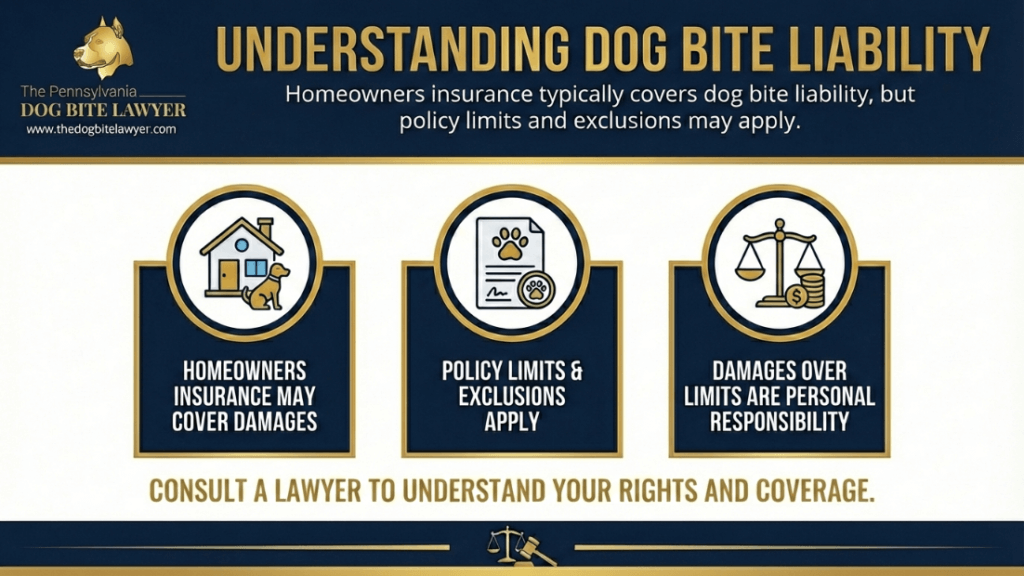
If there is no applicable insurance coverage — or if the damages exceed the policy limits — the dog owner may be personally responsible.
This can happen if:
- The dog owner has no insurance
- The policy excludes dog-related injuries
- The victim’s damages exceed coverage limits
In these situations, a court judgment may allow the victim to pursue personal assets. However, collecting can be complicated, which is why early case evaluation is critical.
Landlord Liability For Compensation
Landlords are not automatically responsible for a tenant’s dog. However, they may be liable if:
- They knew the dog was dangerous
- They could remove or restrict the animal
- The attack occurred in a common area
If a landlord ignores known risks, they may share the responsibility under premises liability laws.
What About Dog Attacks on Commercial Properties?
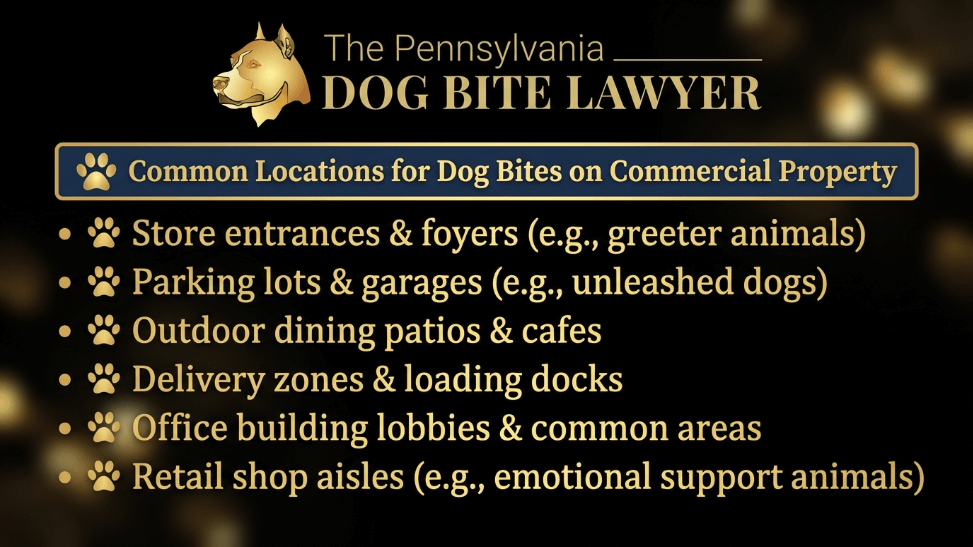
If a dog bite occurs at a business — such as a grooming facility, kennel, pet store, or veterinary clinic — the business’s commercial liability insurance may apply.
For example, if a dog under the care of a kennel bites someone due to negligent supervision, the business may be held responsible rather than the individual dog owner.
Dog Bite Compensation Breakdown
Below is a simplified table explaining who typically pays compensation in different dog bite scenarios:
| Scenario | Who Is Usually Responsible | Insurance That Typically Pays | Notes |
| Dog bites guest at owner’s home | Dog owner | Homeowners insurance | Most common scenario |
| Dog bites someone off-property (e.g., park) | Dog owner | Homeowners or renters insurance | Coverage often follows the owner |
| Dog owned by renter | Dog owner (tenant) | Renters insurance | Landlord rarely responsible |
| Dog in apartment common area | Possible landlord + dog owner | Landlord liability insurance + renters insurance | Depends on knowledge of danger |
| Dog at boarding facility | Business operator | Commercial liability insurance | Based on negligence |
| No insurance coverage | The dog owner personally | Personal assets | Collection may be difficult |
How Strict Liability Affects Compensation
Pennsylvania follows strict liability law for dog bites. This means the owner is responsible regardless of whether the dog had shown prior aggression.
Under strict liability, victims do not need to prove the owner was negligent — only that:
- The dog caused the injury
- The victim was lawfully present
Other states follow a “one-bite rule,” requiring proof that the owner knew or should have known the dog was dangerous.
Types of Compensation Available
- Medical bills (including future treatment and reconstructive surgery)
- Lost wages
- Loss of earning capacity
- Pain and suffering
- Emotional distress
- Scarring and disfigurement
- Psychological counseling
Insurance companies often attempt to minimize payouts, especially in cases involving children or facial injuries. Early legal intervention can protect your claim from undervaluation.
Answers to Your Dog Bite Compensation Questions
1. Does the dog owner have to pay out of pocket?
Usually not. In most cases, homeowners’ or renters’ insurance covers the claim. The insurance company pays up to the policy limits. The owner pays personally only if coverage is denied or insufficient.
2. What if the dog has never bitten anyone before?
In strict liability states such as Pennsylvania, it does not matter. The owner is still responsible.
3. What if I was bitten at a friend’s house?
You may still file a claim. The compensation typically comes from their insurance policy, not directly from your friend. Many victims worry about harming personal relationships, but these claims are designed to be handled by insurers.
4. How long do I have to file a claim?
Each state has a statute of limitations for personal injury claims. Waiting too long can permanently bar your case. Consulting a lawyer quickly ensures deadlines are met.
5. What if a child is bitten?
Children often receive higher settlements because injuries can cause permanent scarring and psychological trauma. Courts recognize the long-term impact of visible injuries on minors.
6. Can I still recover compensation if I was partially at fault?
Possibly. Some states follow comparative negligence rules, reducing compensation based on your percentage of fault. Other states bar recovery if you were primarily responsible.
7. What if the insurance company denies my claim?
Insurance companies deny claims for many reasons, including alleged provocation or policy exclusions. A dog bite attorney can investigate coverage, challenge denials, and pursue litigation if necessary.
Why Dog Bite Victims Need Experienced Legal Advice in Securing Compensation
Insurance companies treat unrepresented victims differently from those with attorneys. Adjusters may attempt to:
- Downplay injury severity
- Argue that the victim provoked the dog
- Offer quick, low settlements
- Delay payment
An experienced dog bite lawyer understands how to document damages, analyze insurance policies, and negotiate aggressively for full compensation.
Explore Compensation Options with Philadelphia Dog Bite Attorney Jeffrey Penneys
If you or your child has suffered a dog bite injury, you deserve answers and full financial recovery. Jeffrey Penneys has decades of experience representing injury victims and understands how insurance companies attempt to limit payouts.
He will investigate all available insurance coverage, identify every responsible party, and fight to secure maximum compensation for medical bills, lost income, and long-term harm.
Do not accept a low settlement offer before understanding your rights.
Contact Jeffrey Penneys today for a free consultation and take the first step toward protecting your future.