When a child is bitten or attacked by a dog in Pennsylvania, the emotional and physical aftermath can be overwhelming for the entire family. Parents are understandably focused on medical care, recovery, and getting their child back to normal.
What many families don’t realize is that the law sets strict deadlines for filing a legal claim, and missing those dog bite claim filing deadlines can permanently eliminate the right to compensation.
The Standard Statute of Limitations for Dog Bite Claims in Pennsylvania
In Pennsylvania, personal injury cases are generally governed by a two-year statute of limitations.
This means an injured person must file their lawsuit within two years of the date the attack occurred. For adult victims, that clock starts ticking immediately and does not pause.
Failing to file within this window almost always results in the court dismissing the case, regardless of how strong the evidence may be.
How Pennsylvania Law Treats Child Victims Differently
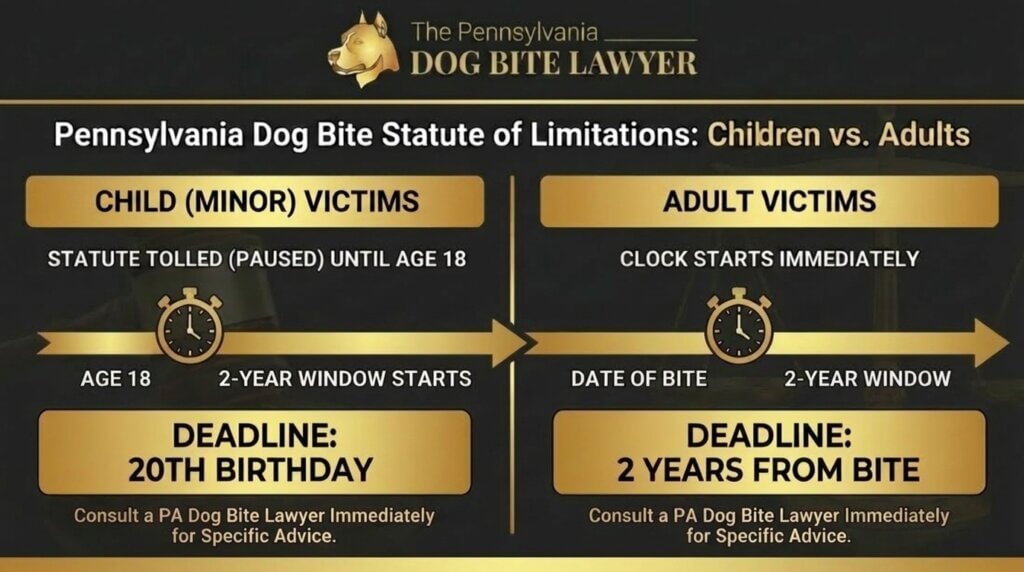
Pennsylvania law recognizes that children cannot advocate for their own legal rights the way adults can. Under Pennsylvania’s tolling rules for minors, the two-year statute of limitations does not begin to run until the child turns 18.
A child who was bitten at any age before 18 has until their 20th birthday to file a personal injury lawsuit. This protection exists because the law acknowledges that parents and guardians may not always act in time, and the child should not permanently lose their rights as a result.
Why the Extended Deadline Doesn’t Mean You Should Wait
While the extended deadline provides important legal protection, waiting is rarely in a child’s best interest. Evidence disappears quickly. Witnesses move away, surveillance footage is deleted, and the dog owner’s insurance policies may change.
The longer a family waits, the harder it becomes to reconstruct what happened and prove liability. Filing a claim sooner rather than later preserves crucial evidence and strengthens the overall case for compensation.
Parents Can File on Behalf of Their Child Right Away
A parent or legal guardian has the right to pursue a dog bite claim on behalf of their minor child immediately after the attack — they do not have to wait until the child turns 18. Filing early allows the family to recover compensation for mounting medical bills, surgeries, therapy, and pain and suffering without delay.
An experienced Pennsylvania dog bite attorney can file the claim, handle all negotiations with the insurance company, and protect the child’s interests throughout the entire process.
What Happens to a Settlement Reached on Behalf of a Minor
When a dog bite case involving a child is settled in Pennsylvania, courts typically require approval of the settlement to ensure it is fair and in the child’s best interest.
Depending on the settlement amount, the funds may be held in a structured arrangement or trust until the child reaches adulthood. This judicial oversight protects children from settlement fund mismanagement and ensures the compensation is preserved for their long-term needs and recovery.
What is the Rule 2039 Mandate In Pennsylvania?
The dog bite settlement process for children is governed strictly by Rule of Civil Procedure 2039. No settlement involving a minor can be finalized, discontinued, or paid out without explicit, formalized approval from a judge.
For larger settlements, judges strongly favor structured settlements. The funds are used to purchase an annuity from a life insurance company, which guarantees tax-free disbursements at scheduled life milestones (e.g., portions released at ages 18, 21, and 25 for tuition or a house down payment)
The Role of Serious Injury in Pennsylvania Child Dog Bite Claims
Pennsylvania law applies strict liability for medical expenses in all dog bite cases, regardless of the dog’s history.
However, for a child to recover full damages — including pain and suffering — the injuries typically need to be classified as severe, such as disfigurement, broken bones, or injuries requiring surgery.
Given that children are often bitten on the face and neck due to their height, serious injuries are tragically common, and the full damages available under PA law can be substantial.
This further highlights the need for special needs trusts, which help safeguard funds from the dog bite settlement for the child’s adult years. The trust is managed by an independent corporate fiduciary and protects the child’s future eligibility for state and federal assistance programs.
Scarring, Disfigurement, and Long-Term Damages for Children
Children who suffer facial scarring or disfigurement experience consequences that extend far beyond physical healing. These injuries can affect self-esteem, social development, relationships, and mental health well into adulthood — courts take this into account when assessing damages.
Under the state’s dog bite law, dog bite compensation reflects not just today’s suffering but the full lifetime impact of the injury. An attorney who understands how to document and present these long-term damages is essential to securing fair compensation for a child victim.
Don’t Confuse the Filing Deadline With the Time to Act
Many parents mistakenly believe that because the law gives their child until age 20, there is no urgency in contacting a lawyer. In reality, the most valuable evidence — photos, medical records, witness accounts, and the dog’s complaint history — must be gathered as quickly as possible.
The statute of limitations sets the outer boundary; it does not define the ideal timeline. Consulting with a Pennsylvania dog bite attorney in the weeks following an attack is always the right move, no matter the child’s age.
Answers to Your Questions on the Child Dog Bite Statute of Limitations in Pennsylvania
Can I file a dog bite lawsuit for my child immediately after the attack?
Yes. A parent or legal guardian can file a civil claim on behalf of a minor child at any time after the attack. You do not need to wait until the child turns 18.
What if the dog bite happened years ago, and my child is still under 18?
In most cases, the statute of limitations clock has not yet started, and you still have time to file. Contact a Pennsylvania dog bite attorney immediately to confirm your specific deadline before any more time passes.
Does the two-year extension apply to all dog bite injuries, or only severe ones?
The tolling rule applies to the filing deadline regardless of injury severity. However, the type and severity of injury affect what damages can be recovered, not when the claim must be filed.
What if the dog owner has no homeowners’ insurance?
You can still pursue a personal injury lawsuit against the dog owner directly. An attorney can help identify all available sources of recovery, including umbrella policies or third-party liability.
Will my child have to testify in court?
Most dog bite cases settle before going to trial. If the case does proceed to court, an attorney will take steps to minimize the child’s involvement and make the process as manageable as possible.
Speak With Pennsylvania Dog Bite Lawyer Jeff Penneys Today
If your child has been bitten or attacked by a dog in Pennsylvania, time matters — even with the extended deadline the law provides.
Jeffrey Penneys is Pennsylvania’s only attorney who focuses exclusively on dog bite cases, with over 30 years of experience helping injured children and their families secure the full compensation they deserve.
Call Pennsylvania dog bite lawyer Jeffrey H. Penneys today at (215) 259-3703 for a free, no-obligation consultation, and let an experienced advocate fight for your child’s future.