In Pennsylvania, dog bite incidents happen more frequently than many people realize, and the injuries they cause can be physically and emotionally devastating. A simple walk in the neighborhood or a visit to a friend’s house can turn traumatic due to an unexpected dog attack.
Pennsylvania law offers protections for victims, including the right to pursue compensation for medical care, lost wages, and emotional distress. But understanding the types of injuries and how they happen is crucial in building a strong case.
Let’s explore the most common injuries caused by dog bites, the medical and emotional toll they take, and what you can do if you or your child suffers dog bite injuries.
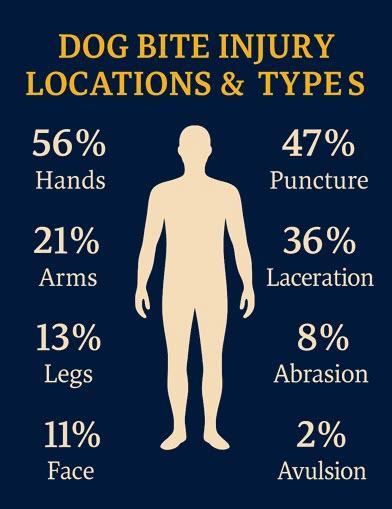
(Source: Dog Bites in the Emergency Department: A Descriptive Injury Analysis)
Deep Puncture Wounds and Tissue Damage
Dog teeth grip and tear. When a dog bites, it doesn’t just scratch the skin. It can sink its teeth deep into muscle tissue, tendons, and even bone. In some cases, especially with powerful breeds like pit bulls or German Shepherds, victims suffer deep wounds, including:
- Puncture wounds that introduce bacteria deep into the tissue
- Torn ligaments or tendons that require surgery
- Avulsion injuries, where skin or flesh is ripped away entirely
These wounds can become infected within hours if not properly cleaned.
Facial Injuries and Scarring
Children are especially vulnerable to bites on the face and neck due to their height. These injuries often require:
- Plastic surgery or skin grafts
- Stitches that leave permanent scarring
- Long-term psychological trauma, including PTSD or fear of animals
Facial injuries aren’t just physical. They often have lifelong emotional consequences, particularly for young victims. Under Pennsylvania law, additional compensation may be pursued for disfigurement, as well as pain and suffering.
Broken Bones and Crush Injuries
Larger dogs can exert bite forces over 300 pounds per square inch. When they clamp down on a limb, it can result in:
- Fractured wrists or forearms
- Crushed fingers or hands
- In severe cases, partial amputation
These injuries result not just from the bite, but also from the force of the attack, for instance, when a dog knocks someone down or pulls them forcefully.
Nerve Damage and Loss of Function
When a bite damages underlying nerves, victims may suffer from:
- Loss of sensation or mobility in fingers or limbs
- Chronic pain (neuropathy)
- Impaired use of hands or arms
These nerve damage injuries are more common in attacks to the arms, hands, and legs. In Pennsylvania, ongoing disability or loss of function can factor significantly into the damages you may recover.
Infections and Rabies Exposure
Even if a wound appears small, it can harbor dangerous bacteria like:
- Pasteurella (most common)
- Capnocytophaga
- MRSA
In rare cases, victims are exposed to rabies after a dog bite, especially if the dog wasn’t up to date on vaccinations. Pennsylvania law requires dog owners to keep their pets vaccinated. Failure to do so can constitute negligence per se, strengthening your legal claim.
Neck and Arm Injuries
When trying to defend themselves or shield a child, victims often raise their arms or turn their bodies, resulting in:
- Lacerations and defensive wounds
- Torn rotator cuffs or sprained shoulders
- Whiplash or soft tissue injuries to the neck
These are common among adults who instinctively try to push the dog away or protect someone else. These injuries are often overlooked initially but can lead to long-term physical therapy needs.
Psychological Trauma
Physical wounds heal, but emotional scars often linger longer. Data published in the Journal of Pediatrics shows children are particularly vulnerable to PTSD after dog attacks. Dog bite victims can experience the following psychological health concerns in the weeks and months after an attack:
- Nightmares and sleep disorders
- Anxiety around dogs or public places
- PTSD in both children and adults
Pennsylvania law allows victims to seek compensation for emotional distress, especially when psychological injuries interfere with daily life, school, or work.
What Causes Dog Bite Injuries in Pennsylvania?
While each case is unique, common contributing factors include poor socialization or training, negligent handling and restraining failures, as well as protective aggression. Larger dog breeds, such as rottweilers, pit bulls, and German shepherds, are responsible for the most serious injuries, including bites to the face and neck.
Request Your Free Dog Bite Injury Consultation
After you or someone you love suffers a serious injury in a dog attack, you need a dog bite lawyer who will fight for your compensation and ensure coverage for loss of income and medical costs during your recovery. Jeff Penneys is the Pennsylvania dog bite lawyer for all serious injury cases and has spent the last 30 years winning complex cases for families throughout Philadelphia, Montgomery, Bucks, Delaware, and Chester Counties.
Start your recovery process with a free case consultation. Remember: you will pay no legal fees unless you win a settlement. Call Jeff Penneys now at (215) 259-3703 to discuss your case.